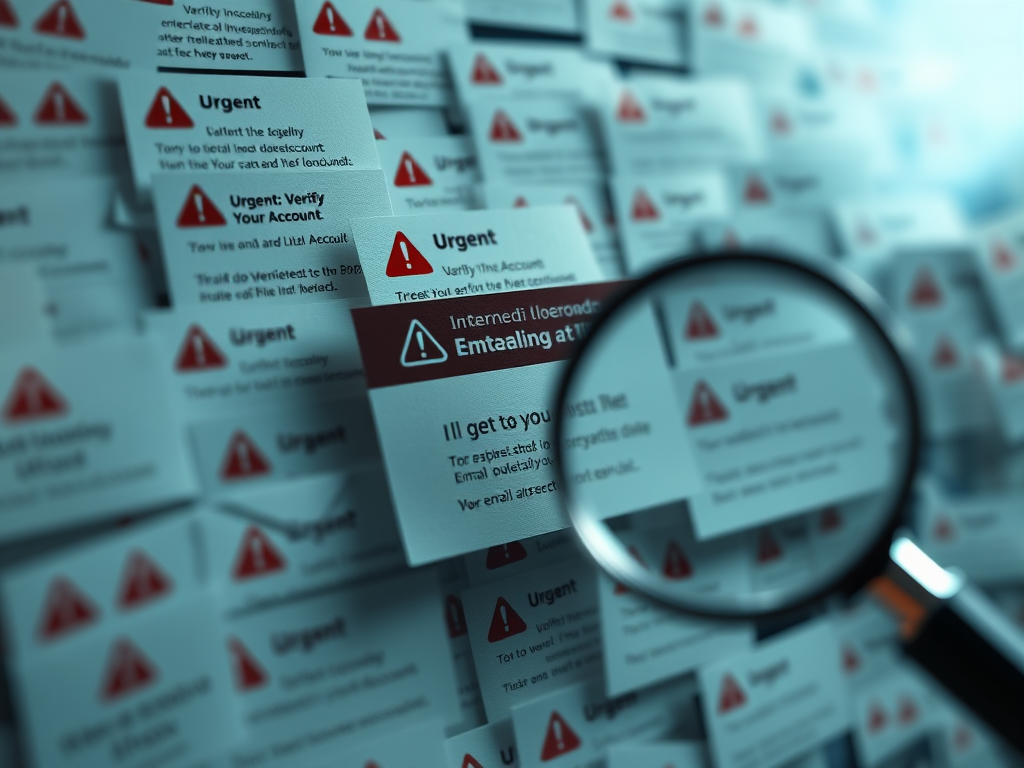
It started the way most things start — with annoyance. EmailClarity breaking down spam.
One too many “Urgent: Verify Your Account” emails. One too many “I can get you 20-30 extra sales before Black Friday” pitches from strangers. One too many fake delivery notifications that almost got me to click.
So instead of just hitting delete, I started saving them. Then analyzing them. Then writing about them — because if these emails were landing in my inbox, they were landing in yours too.
EmailClarity is simple. EmailClarity breaking down spam. Every post takes a real suspicious email — the exact kind that shows up uninvited in your inbox — and breaks it apart piece by piece. What does it claim? What are the red flags? What does the sender actually want? And most importantly: how do you check if it’s real?
No cybersecurity jargon. No fear-mongering. Just clear, honest breakdowns written by someone who reads way too many scam emails so you don’t have to.
Who’s behind this?
The EmailClarity Team is deliberately anonymous. Not because we’re hiding — but because the focus should be on the emails, not on us. What matters is that someone is collecting these, analyzing them, and putting the information out there for free.
Think of it like a neighborhood watch, but for your inbox.
What you should know about us:
- We’re a real person (yes, singular, with a very full inbox)
- We run online businesses ourselves, so we get the same scam pitches you do
- We have zero tolerance for manipulation, whether it’s a phishing link or a “marketing expert” with suspiciously vague promises
- We believe transparency beats fear — understanding how scams work is the best protection
Why “Clarity”?
Because scammers rely on confusion. They use urgency, fear, authority, and familiarity to short-circuit your thinking. The antidote isn’t more security software — it’s understanding. When you can see the manipulation tactics clearly, they stop working.
That’s what we do. We make the invisible visible.
Our rules
- Every email is real. We never fabricate examples. Every post analyzes an actual email someone received.
- No fear-mongering. We explain risks honestly without trying to scare you into anything.
- No hidden agendas. Our analysis is never influenced by who pays us. When we recommend a security tool, it’s because it directly solves the problem we just showed you — and we always tell you when a link is an affiliate link.
- Plain language. If your grandmother wouldn’t understand the explanation, we rewrite it.
- Always verify. We always tell you how to check for yourself rather than just trusting our analysis.
Got a suspicious email? Send it our way.
Here’s the deal — we can only write about what we see. And no matter how full our inbox is, yours probably has something we haven’t covered yet.
If you received an email that you’re not sure about — forward it to us. We’ll look at it and give you our honest take. No charge, no catch, no sign-up required. Just one person helping another figure out if something’s legit.
If you received an email that’s clearly a scam and you think others should know about it — send it over. If we haven’t written about that type yet, we’ll turn it into a full blog post so the next person who Googles it finds an answer.
Forward suspicious emails to: blog@email-clarity.com
Use our email analysis tool at scan.email-clarity.com to scan suspicious emails instantly
A few things to know:
- We read every email we receive (yes, really)
- We’ll never share your personal information — we redact everything before publishing
- If we use your submission for a blog post, no identifying details will ever appear
- We can’t guarantee a response to every email, but we try our best
- Sometimes we’ll reply with a quick “yep, that’s a scam — delete it” and sometimes it becomes a full post
You don’t need to be tech-savvy. You don’t need to explain why you think it’s suspicious. Just forward it and say “is this real?” — that’s enough.
The more emails we collect, the more people we can help. Your sketchy inbox is someone else’s warning sign.
Stay sharp out there.
— The EmailClarity Team


